Tell Us About Your Project
Share the room, your approximate timing, and anything you already know about the tile. We use those details to start a practical conversation.
A sound surface begins well before the first tile is set.
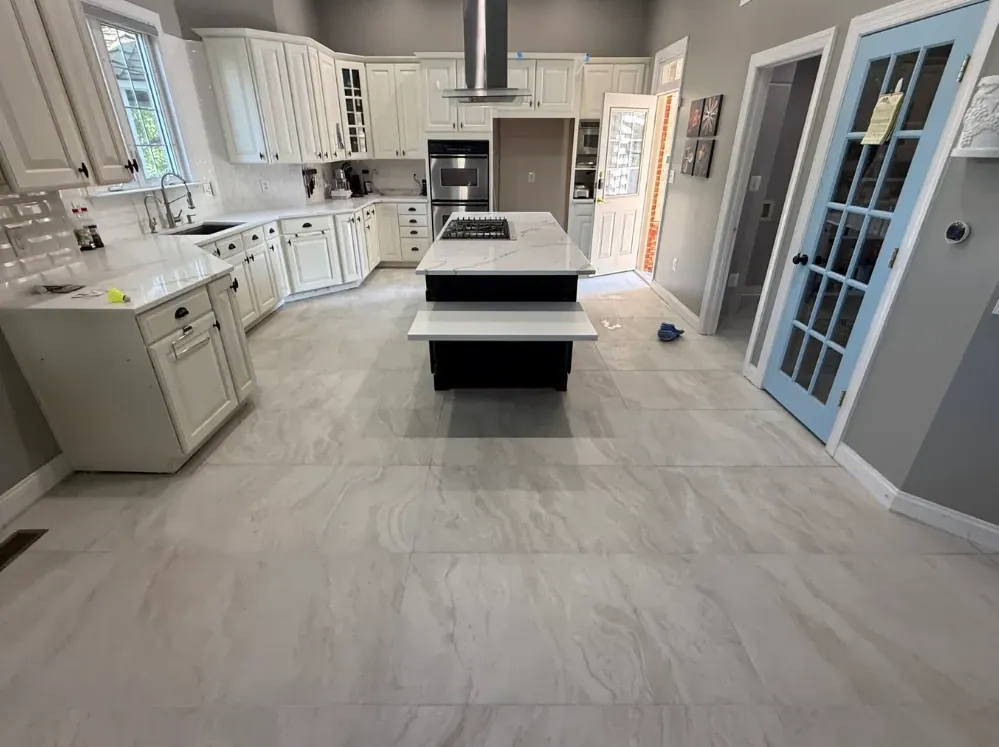
Tile removal is only the first part of a sound floor renewal. Winfield Tile Installation helps homeowners and property managers in West Chicago, Winfield, Wheaton, Carol Stream, and Warrenville prepare the surface for a new tile installation. We remove existing tile and setting materials with a practical plan for dust, access, and debris, then inspect the exposed floor for damage, movement, moisture concerns, and uneven areas. The goal is a substrate that is clean, stable, properly prepared, and ready for the tile, pattern, and grout selected for the room.
A new tile floor starts with what is underneath it.
A little planning goes a long way. Enter your room dimensions, choose a tile and allow for the cuts.
This is a planning estimate. We confirm exact quantities during the on-site measure.
Share the room, your approximate timing, and anything you already know about the tile. We use those details to start a practical conversation.
We look at the actual space, take measurements, and discuss tile, pattern, edges, and transitions. The estimate is based on conditions we can see.
Before setting tile, we address the substrate and plan the work sequence. Preparation may include removal, leveling, waterproofing, or transition work as the space requires.
Layout lines guide the field tile, cuts, and joint alignment. We keep the work area orderly while the surface takes shape one measured section at a time.
After the tile has set, we grout, complete appropriate finish details, and clean the surface. We then walk through the finished work and care considerations with you.
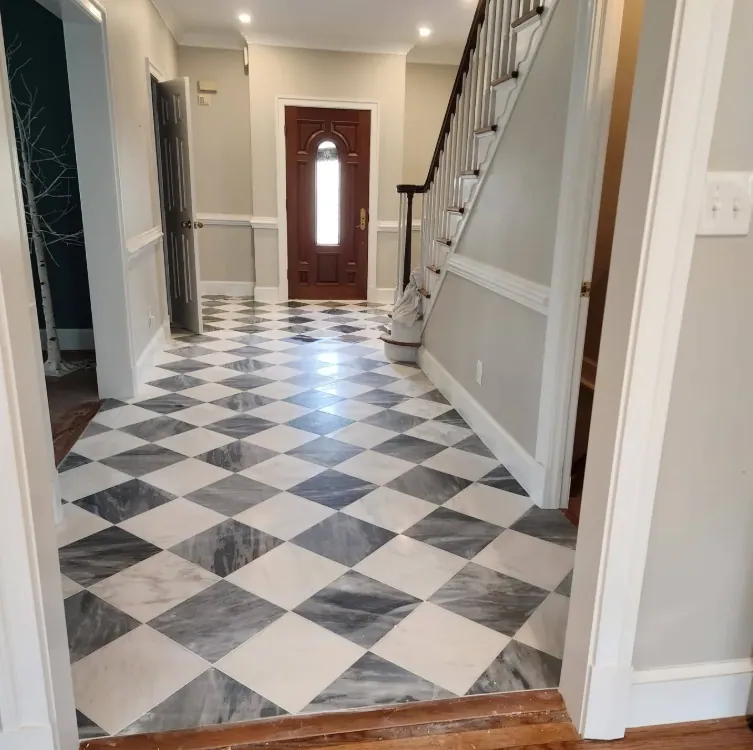
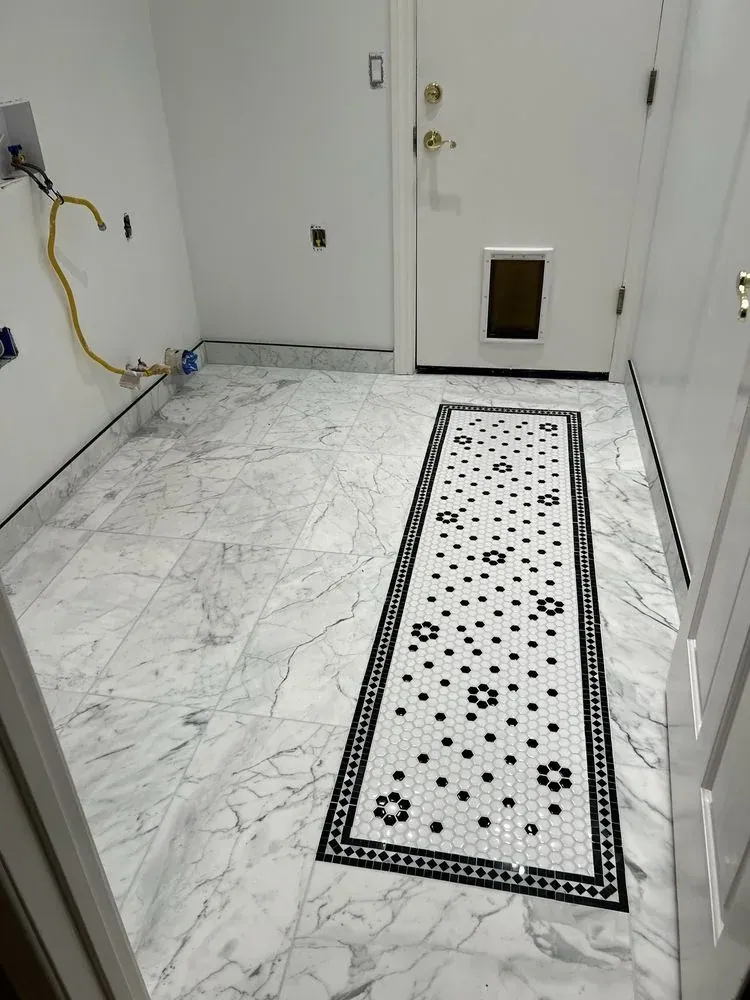
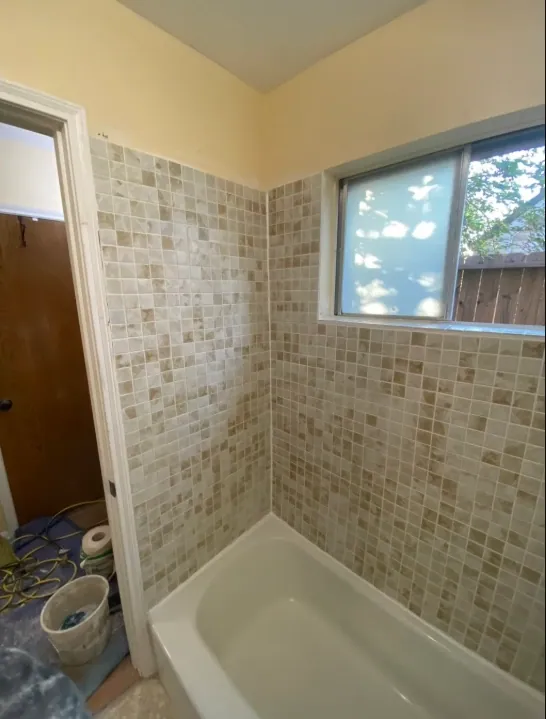
Appearance is only one part of choosing tile. The room, support and exposure help determine the right assembly.
Walls, backsplashes and suitable residential floors.
Check the product’s intended use and clean with a compatible neutral cleaner.
Floors, wet areas and high-use rooms when rated for the application.
Choose an appropriate surface texture and remove grit before damp cleaning.
Broad floor and wall planes with fewer visual interruptions.
Needs a flat substrate, suitable mortar and careful coverage checks.
Floors, walls and detail areas suited to the particular stone.
Avoid acidic cleaners. Sealing depends on the stone and product guidance.
Detail areas, shower floors and surfaces with smaller changes in plane.
Sheet alignment and consistent joints need close attention.
Backsplashes and accent walls where approved by the manufacturer.
Requires compatible mortar, handling and movement accommodation.
Before work begins, we discuss the room, the existing finish, door clearances, baseboards, appliances, transitions, and the tile you are considering. Removal can expose plywood, a concrete slab, cement board, an older mortar bed, adhesive, or more than one layer of flooring. Each condition changes the appropriate next step. We protect nearby finished surfaces, establish a workable path for debris, and use controlled methods suited to the room rather than treating every floor the same way.
Tile and brittle setting material can create sharp fragments and fine dust. We use containment and cleanup practices appropriate to the work area, keep debris managed as the job progresses, and identify anything that needs to be handled separately. If removal reveals a damaged panel, weak underlayment, cracking, or a moisture-related concern, we explain the observation before recommending preparation. The assessment also considers deflection: a floor can look flat while still moving under foot traffic, contributing to cracked grout, loose tile, or lippage.
Once the old flooring is out, loose material, dust, adhesive residue, and high spots must be addressed. A concrete floor may need patching, crack treatment, or a compatible primer. A wood-framed floor may need sound underlayment, appropriate fastening, and a tile-rated surface. Cement board and foam board are not interchangeable in every situation: cement board offers a rigid tile substrate when installed with the required bedding and fasteners, while foam board is lightweight and can also serve as part of a waterproofing assembly when its system is installed correctly. Product selection follows the substrate, room conditions, and installation details.
Low areas can require a compatible patching compound or self-leveling underlayment. Self-leveler is not a shortcut for cleaning, structural correction, or careful perimeter preparation; it must be mixed, placed, and allowed to cure according to its instructions. We check transitions, thresholds, and finished-floor heights so a level surface still meets adjacent rooms cleanly. In entries and other exposed areas, the plan also accounts for water, salt, and grit that may be tracked indoors during winter.
Depending on the floor and tile assembly, an uncoupling or crack-isolation membrane may help manage certain stresses, while a waterproofing membrane is used where the assembly requires moisture protection. Membranes do not correct structural movement or replace a prepared substrate.
Keep the finished surface free of abrasive grit, especially at exterior entries. Winter salt and sand can scratch some surfaces and wear at grout when repeatedly walked across the floor, so use walk-off mats and sweep or vacuum with a suitable hard-floor attachment. Do not let gritty water dry on the surface. Use the cleaning method recommended for the tile and grout rather than an acidic or heavily abrasive product chosen at random.
Natural stone commonly needs material-specific sealing and periodic review because absorption varies by stone and finish. Sealer can reduce staining but is not a substitute for prompt cleanup or a sound installation. Ask which products and intervals fit the tile, grout, and stone selected for your project.
Preparation scope depends on the room's square footage, number of tile layers, setting material, substrate type, accessibility, furniture or appliance handling, debris path, and disposal needs. Additional factors include repairs to the substrate, deflection or framing concerns, patching and self-leveling, board or membrane systems, moisture conditions, transitions, baseboards, and the number of corners, fixtures, and detailed cuts. The selected tile matters too: large-format pieces, natural stone, mosaics, and glass can require different handling and setting materials.
A clear quote discussion should separate removal, preparation, installation, materials, disposal, and conditions that cannot be confirmed until the floor is opened. We do not publish a one-size-fits-all price because the visible tile rarely tells the full story beneath it. Call (773) 900-5458 or email [email protected] with the room, approximate size, current flooring, and target tile. The office address is 956 N Neltnor Blvd, West Chicago, IL 60185. Ask for written project terms; no guaranteed workmanship warranty is stated here.
Our service area brings us to homes and businesses across the western suburbs of Chicago.
Good tile work begins with clear answers. Here are a few things to know before we visit.
Have another question?It can include removing tile and setting materials, protecting the work area, managing debris, cleaning the exposed substrate, correcting suitable high or low areas, and preparing a compatible board, membrane, or setting surface. The exact scope depends on what is found after removal.
Photos and room details help with an initial discussion, but hidden conditions can only be confirmed when the floor is opened. We review likely possibilities beforehand and explain newly visible damage, movement, moisture concerns, or uneven areas before proceeding with added preparation.
Self-leveling underlayment can address suitable low areas when the substrate, perimeter, primer, mixing, placement, and cure requirements are correct. It does not replace structural correction, cleaning, or a complete plan for transitions and finished-floor height.
Neither is automatically right for every floor. Cement board and foam board have different properties and installation requirements. The choice depends on the substrate, room conditions, tile assembly, moisture needs, height, and the manufacturer's compatible installation details.
Remove small personal items, clear cabinets or closets as discussed, identify fragile nearby finishes, and arrange access to the work area. Tell us about appliances, trim, pets, building rules, and preferred paths for moving debris so protection and scheduling can be planned.
No guaranteed workmanship warranty is stated on this page. Ask Winfield Tile Installation for the written project terms that apply to your specific proposal, including the defined scope, materials, care guidance, and any workmanship terms.